
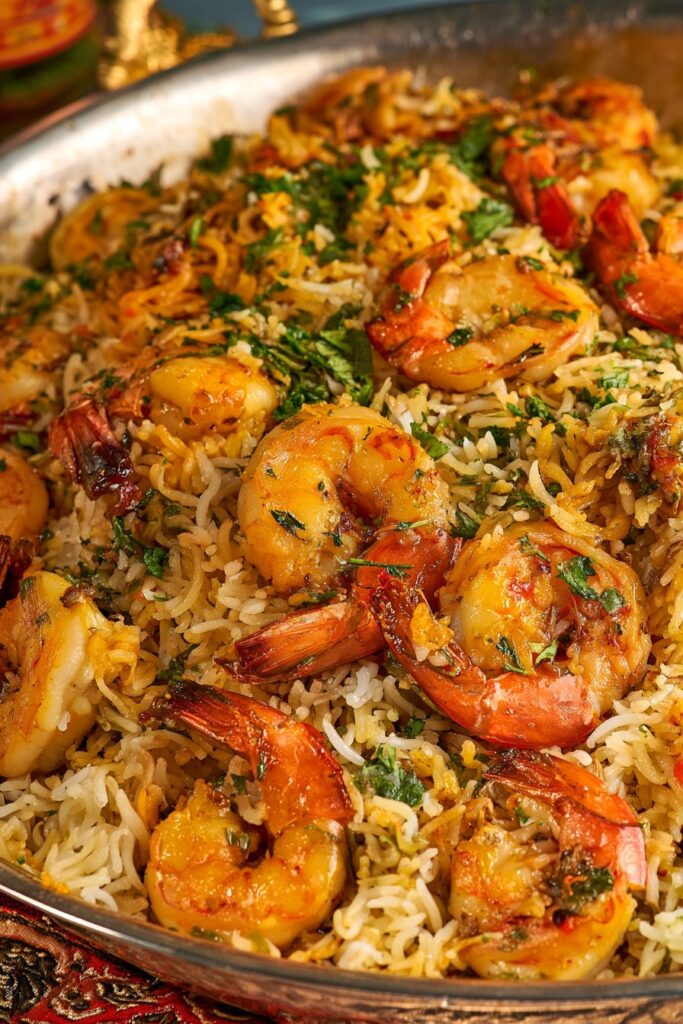
Shrimp Rice with Herbs, also known as Meygoo Polo, is a fragrant Persian-inspired rice dish that brings together tender shrimp, fluffy basmati rice, fresh herbs, and warming spices. Cilantro, dill, green onions, and fenugreek create a fresh, savory flavor, while saffron adds a beautiful golden color and delicate aroma. Garlic, onion, curry powder, and a touch of red pepper flakes give the dish extra depth without overpowering the naturally sweet taste of the shrimp.
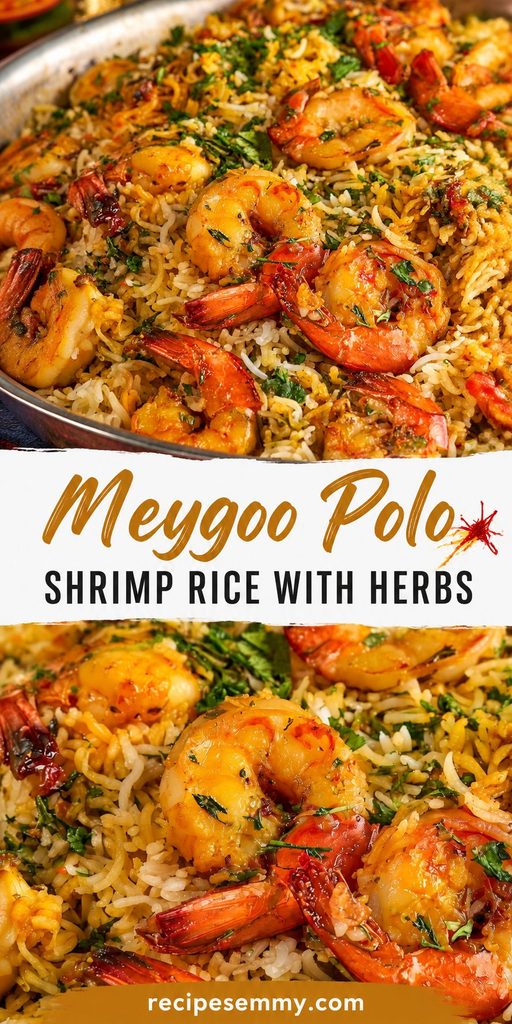
What makes this shrimp and herb rice especially appealing is the way the ingredients complement one another. The rice provides a light, fluffy base, the shrimp adds satisfying seafood flavor, and lemon juice brightens every bite. With its colorful vegetables, generous herbs, and aromatic spices, Meygoo Polo is a lovely choice for a family dinner or a special meal when you want something a little different from everyday rice. It also offers flexibility, allowing you to choose your preferred rice combination and adjust the heat to suit your taste.
Why You’ll Love This Recipe
- Fresh herbs in every bite: Cilantro, dill, green onions, and fenugreek give the rice a distinctive herbal flavor that pairs naturally with seafood.
- Fragrant, colorful rice: Saffron, turmeric, and spices add warmth, color, and aroma, making the finished dish inviting without requiring a complicated sauce.
- Tender, flavorful shrimp: Garlic, lemon juice, and seasonings help bring out the shrimp’s natural sweetness.
- Flexible rice options: The recipe includes basmati rice, brown basmati rice, and quinoa or rice, so you can adapt the grain combination to your preferences.
- Easy to customize: Adjust the red pepper flakes, choose curry powder or Persian advieh, and use fresh or dried fenugreek depending on what you have available.
- A complete, satisfying meal: Rice, shrimp, herbs, and vegetables come together in one flavorful dish that works well for lunch or dinner.
Preparation and Tools
Before cooking, rinse the rice thoroughly under cold running water until the water becomes clearer. This removes excess surface starch and helps the grains cook up more separately. If you are using brown rice, remember that it generally takes longer to cook than white basmati rice, so the cooking time will depend on your chosen combination.
Prepare the remaining ingredients before heating the pan. Chop the onion, garlic, red bell pepper, cilantro, dill, green onions, and fenugreek leaves. Clean and devein the shrimp if they have not already been prepared, and keep them refrigerated until needed.
You will need a large pot for cooking the rice and a wide skillet or sauté pan for preparing the shrimp and herb mixture. A small heatproof bowl is useful for dissolving the powdered saffron in hot water. A sharp knife and cutting board will also make the preparation easier.
Preparation Tips for the Best Meygoo Polo
Choose your rice combination carefully
The ingredient list offers several options, including white basmati rice, brown basmati rice, and quinoa or rice. These alternatives have different cooking times and textures, so follow the package instructions for whichever grains you select.
Basmati rice is particularly suitable when you want long, separate grains that complement the shrimp and herbs. Brown basmati offers a firmer, nuttier texture, while quinoa provides a different texture from traditional rice. If combining grains, make sure their cooking requirements are compatible or cook them separately before combining them with the seasoned mixture.
Prepare the saffron before cooking
Dissolve the powdered saffron in the specified two tablespoons of hot water before adding it to the dish. This helps distribute its color and aroma more evenly than adding the powder directly to a large pot of rice.
Saffron has a distinctive fragrance, so there is no need to add more than the listed amount. Its purpose is to complement the herbs, spices, and seafood rather than dominate them.
Chop the herbs and vegetables evenly
Try to keep the onion and red bell pepper in reasonably uniform pieces so they soften evenly. Chop the fresh herbs finely enough to distribute throughout the rice, but avoid crushing them into a paste.
The four herbs each contribute something different. Cilantro brings a fresh, slightly citrusy character, dill offers a distinctive aromatic quality, green onions add a mild onion flavor, and fenugreek provides a deeper, slightly earthy herbal note.
If using dried fenugreek instead of fresh leaves, measure the specified three-quarters of a tablespoon. Dried herbs can have a more concentrated flavor, so the listed substitution is important.
Keep the shrimp from overcooking
Raw shrimp cooks much faster than most grains. Add it when the rice and herb mixture is ready for the shrimp to be incorporated, rather than leaving it in the pan throughout the entire rice-cooking process.
Shrimp is cooked when it turns opaque and pinkish, with a firm but tender texture. Its exact cooking time depends on its size and the heat of the pan. Avoid continuing to cook it after it is done, as overcooked shrimp can become tough and rubbery.
Ingredients for Shrimp Rice with Herbs
The combination of fresh herbs, aromatic spices, and seafood is what gives Meygoo Polo its distinctive character. Each ingredient has a role in balancing the dish.
Rice and quinoa
The recipe lists one cup of basmati rice, one-half cup of brown basmati rice, and one-half cup of quinoa or rice, with alternatives provided for the rice varieties. These ingredients form the base of the meal and absorb the flavors of the herbs, spices, and saffron.
Because the listed alternatives offer several possible combinations, choose the grains you intend to use before beginning. Their cooking times will determine how you prepare the rice portion.
Shrimp
One pound of raw, cleaned, and deveined shrimp provides the main source of seafood flavor. Shrimp pairs particularly well with garlic, lemon, saffron, and fresh herbs because its natural sweetness balances the savory seasoning.
Use shrimp that has been properly cleaned and keep it chilled until you are ready to cook it.
Onion, garlic, and red bell pepper
One large chopped onion builds the savory foundation, while four large garlic cloves give the dish a stronger aromatic flavor. Thinly sliced red bell pepper adds color, mild sweetness, and a tender vegetable element.
These ingredients complement the herbs without making the rice heavy.
Fresh herbs and fenugreek
The recipe uses one cup of chopped cilantro, one-half cup of chopped dill, one-half cup of chopped green onions, and one-quarter cup of chopped fenugreek leaves, with dried fenugreek offered as an alternative.
This generous amount of herbs is central to the recipe. Rather than acting as a small garnish, they contribute much of the dish’s flavor and character.
Spices, lemon, and saffron
Curry powder or Persian advieh provides the main spice blend, while red pepper flakes introduce adjustable heat. Turmeric contributes earthy warmth and a golden tone, cumin adds depth, and black pepper rounds out the seasoning.
Salt enhances the other ingredients, while lemon juice gives the finished dish a bright, tangy note. The saffron, dissolved in hot water, contributes its characteristic fragrance and color.
Olive oil is used to cook the onion, garlic, pepper, and shrimp mixture, helping the aromatics soften and the seasonings distribute throughout the dish.
How to Make Shrimp Rice with Herbs
Step 1: Rinse and prepare the rice
Rinse your selected rice thoroughly under cold water. Prepare the rice according to the cooking requirements of the grain or combination you have chosen.
If you are using different types of rice or quinoa together, pay attention to their individual cooking times. Brown basmati usually requires longer than white basmati, so cooking incompatible grains together from the beginning may leave some grains undercooked while others become too soft.
Once the grains are cooked, keep them ready for combining with the shrimp and herb mixture.
Step 2: Chop the aromatics and herbs
Chop the onion and garlic, thinly slice the red bell pepper, and prepare the cilantro, dill, green onions, and fenugreek leaves.
Keep the vegetables and herbs separated until they are needed. This makes it easier to add the ingredients in the intended order and prevents the delicate herbs from being exposed to unnecessary cooking.
Next, dissolve the powdered saffron in two tablespoons of hot water and set it aside.
Step 3: Sauté the onion, garlic, and bell pepper
Heat the three tablespoons of olive oil in a large skillet or sauté pan over medium heat. Add the chopped onion and cook until it softens and begins to turn translucent.
Add the garlic and thinly sliced red bell pepper. Continue cooking until the garlic becomes fragrant and the pepper starts to soften. Stir regularly to prevent the garlic from browning too quickly.
This aromatic base gives the shrimp and rice a savory foundation while allowing the sweetness of the onion and bell pepper to develop.
Step 4: Add the spices
Stir in the curry powder or Persian advieh, red pepper flakes, turmeric, ground cumin, black pepper, and salt.
Mix thoroughly so the spices coat the onion, garlic, and bell pepper. Allow them to warm briefly in the olive oil, stirring frequently, until fragrant.
Keep the heat moderate. The aim is to release the spices’ aromas without scorching the garlic or letting the seasonings stick to the bottom of the pan.
Step 5: Add the shrimp
Add the cleaned and deveined shrimp to the seasoned mixture. Stir to coat the shrimp with the aromatics and spices, then cook until the shrimp turns opaque and pinkish and is cooked through.
The cooking time will vary according to shrimp size, so use its appearance and texture rather than relying on a fixed number of minutes. Avoid overcooking, and keep the shrimp moving gently through the mixture so it cooks evenly.
Step 6: Incorporate the fresh herbs
Add the chopped cilantro, dill, green onions, and fenugreek leaves. Stir gently to distribute the herbs throughout the shrimp mixture.
Cook just long enough for the herbs to begin softening and release their aroma. They should blend into the seasoned ingredients while retaining their fresh herbal character.
If you are using dried fenugreek, use the specified three-quarters of a tablespoon in place of the fresh leaves.
Step 7: Finish with lemon and saffron
Add the two tablespoons of lemon juice and the prepared saffron water. Stir carefully so the bright citrus flavor and saffron aroma are distributed throughout the mixture.
Taste and adjust the salt if needed, keeping in mind that the recipe already includes one teaspoon of salt. If you prefer more heat, you can adjust the red pepper flakes within your personal taste preference.
Step 8: Combine with the rice and serve
Add the prepared rice to the shrimp and herb mixture, folding gently until the grains are evenly coated and the shrimp and herbs are distributed throughout.
Avoid vigorous stirring, especially if you are using long-grain basmati, as this can break the grains and make the mixture mushy. Once everything is evenly combined and heated through, remove the pan from the heat.
Serve the shrimp rice warm so the saffron, herbs, lemon, and spices remain fragrant.
Notes and Variations
- Use curry powder or advieh: Curry powder gives the dish a familiar warm spice profile, while Persian advieh offers a different aromatic character. Use one tablespoon of either option, as listed.
- Adjust the heat: The teaspoon of red pepper flakes can be adjusted to taste. For a milder dish, use less; for a spicier result, retain the full amount or adjust according to preference.
- Choose fresh or dried fenugreek: Use one-quarter cup of chopped fresh fenugreek leaves or three-quarters of a tablespoon of dried fenugreek.
- Keep the herbs balanced: The quantities of cilantro, dill, green onions, and fenugreek create the recipe’s characteristic herbal flavor. If making substitutions, remember that each herb has a distinct taste.
- Plan the grains in advance: Because the recipe offers several rice and quinoa options, cooking the grains according to their individual requirements is essential for a pleasant final texture.
Common Mistakes to Avoid
Using grains with incompatible cooking times
White basmati, brown basmati, and quinoa do not necessarily finish cooking at the same time. Check the package directions and cook them separately when necessary before combining them with the shrimp mixture.
Cooking the shrimp for too long
Shrimp can quickly change from tender to rubbery. Add it at the appropriate stage and remove the dish from the heat once the shrimp is cooked through.
Browning the garlic too much
Garlic can develop a bitter taste if it becomes too dark. Add it after the onion has started softening, and stir frequently while the bell pepper and spices cook.
Adding the herbs too early
Fresh herbs contribute a distinctive aroma that can become less pronounced with prolonged cooking. Add them after the seasoned base and shrimp are prepared, and cook only until they begin to soften.
Stirring the rice too aggressively
Long-grain rice can break when stirred forcefully, particularly after cooking. Fold the rice gently into the shrimp mixture to help preserve the grains and distribute the ingredients evenly.
What to Serve With Shrimp Rice with Herbs (Meygoo Polo)
Meygoo Polo has plenty of flavor from the shrimp, fresh herbs, saffron, and spices, so the best sides are simple and refreshing. Choose dishes that add a little crunch, acidity, or freshness without competing with the rice.
1. Shirazi Salad
A Persian Shirazi salad made with diced cucumber, tomatoes, onion, lemon juice, and fresh herbs is an excellent accompaniment. Its crisp vegetables and tangy dressing contrast with the warm, savory rice and shrimp.
2. Cucumber Yogurt Sauce
Serve a small bowl of yogurt mixed with chopped cucumber, a little salt, and fresh herbs. The cool, creamy texture balances the spices and red pepper flakes while complementing the dill and cilantro in the rice.
3. Roasted or Grilled Vegetables
Roasted zucchini, eggplant, or bell peppers make a simple vegetable side. A light coating of olive oil and a squeeze of lemon are enough to bring out their natural sweetness without overwhelming the main dish.
4. Warm Flatbread
Persian flatbread or another soft flatbread can be served alongside the rice. It is especially useful for enjoying any remaining herbs and seasoned juices on the plate.
5. Fresh Lemon Wedges
Place lemon wedges on the table so everyone can add a little extra citrus to their serving. The bright acidity works particularly well with the natural sweetness of shrimp and the earthy flavor of fenugreek.
Storage Instructions
Refrigerating Leftovers
Allow the shrimp rice to stop steaming heavily, then transfer it to shallow, airtight containers and refrigerate promptly. Do not leave cooked rice at room temperature for extended periods. As a food-safety guideline, refrigerate leftovers within two hours of cooking, or within one hour if the surrounding temperature is above 90°F (32°C).
Store the rice and shrimp together for up to 3–4 days in the refrigerator, provided they have been handled and refrigerated safely.
Reheating
For the best texture, reheat individual portions in a covered skillet over medium-low heat with a small splash of water. Stir gently and heat until the rice is steaming hot throughout and the shrimp is thoroughly reheated.
You can also use a microwave-safe container. Cover loosely, heat in short intervals, and stir carefully between intervals to distribute the heat evenly.
Avoid repeatedly reheating the same batch. Divide leftovers into individual portions so you only warm what you intend to eat.
Can You Freeze Meygoo Polo?
Cooked shrimp rice can be frozen, although the shrimp may become slightly firmer and the fresh herbs may lose some of their original brightness. If freezing, transfer cooled portions to airtight, freezer-safe containers and freeze promptly.
For the best quality, use frozen portions within approximately 1–2 months. Thaw overnight in the refrigerator and reheat until steaming hot throughout. Do not thaw cooked rice at room temperature.
Can You Prepare It Ahead?
You can make preparation easier by rinsing the rice, chopping the vegetables, preparing the herbs, and dissolving the saffron shortly before cooking. Store cut ingredients in covered containers in the refrigerator.
For the freshest flavor and best shrimp texture, cook the shrimp close to serving time. If preparing the entire dish ahead, refrigerate it promptly and reheat only once.
Estimated Nutrition
The following nutrition information is an estimate for one serving of shrimp rice with herbs. Actual values will depend on the rice and quinoa combination selected, the specific spice blend, and the final serving size.
Estimated per serving, assuming 4 servings from the prepared recipe. Values are approximate and should not be treated as laboratory-verified nutritional information.
| Nutrient | Amount |
|---|---|
| Calories | 430 kcal |
| Protein | 27 g |
| Carbohydrates | 48 g |
| Fat | 14 g |
| Saturated fat | 2 g |
| Cholesterol | 165 mg |
| Fiber | 4 g |
| Sugar | 4 g |
| Sodium | 780 mg |
| Potassium | 590 mg |
| Vitamin A | 45% DV |
| Vitamin C | 65% DV |
| Calcium | 10% DV |
| Iron | 20% DV |
These figures are approximate. The quantities of rice, brown rice, and quinoa, along with the choice of spice blend and the amount of salt used, can noticeably affect the nutritional values. The vitamin estimates are particularly dependent on the quantities and types of fresh herbs and vegetables used.
Frequently Asked Questions
What does Meygoo Polo mean?
Meygoo means shrimp in Persian, while polo refers to a rice dish. Meygoo Polo is therefore commonly understood as shrimp rice. This version combines rice with shrimp, fresh herbs, vegetables, saffron, and warm spices.
Can I use frozen shrimp?
Yes. Frozen raw shrimp can be used if it is thawed safely before cooking. Thaw it in the refrigerator or in a sealed bag under cold running water, then drain and pat it dry. Excess moisture can dilute the seasoning and make the mixture watery.
Can I use dried herbs instead of fresh herbs?
Fresh herbs are preferable for this recipe because cilantro, dill, green onions, and fenugreek contribute much of its distinctive character. Dried herbs can change the flavor and texture, so substitutions should be made carefully. The recipe specifically provides a dried alternative for fenugreek: three-quarters of a tablespoon instead of one-quarter cup of fresh leaves.
Is Meygoo Polo spicy?
The dish has a warm, savory spice profile from curry powder or advieh, cumin, turmeric, and black pepper. The red pepper flakes add the main adjustable heat. Reduce them if you prefer a milder flavor, or increase them slightly if you enjoy more spice.
Can I make this recipe with brown rice?
Yes. Brown basmati rice is included in the ingredient options. It has a firmer texture and generally requires more cooking time than white basmati. Cook it according to its package directions and make sure it is tender before combining it with the shrimp and herbs.
What can I use instead of Persian advieh?
The recipe allows one tablespoon of curry powder as an alternative. These seasonings have different flavor profiles, but either can provide the aromatic spice base needed for the dish. Choose whichever you prefer or have available.
A Fresh and Fragrant Seafood Dinner
Shrimp Rice with Herbs (Meygoo Polo) brings together tender seafood, aromatic rice, fresh greens, and warming spices in a satisfying meal. The saffron and lemon add brightness, while the combination of herbs gives the dish its distinctive flavor. Serve it with a crisp salad or cool yogurt sauce for a balanced meal, and keep the preparation simple enough to let the ingredients shine.
Print
Shrimp Rice with Herbs (Meygoo Polo)
- Total Time: 50 minutes
- Yield: 4 servings 1x
Description
Shrimp Rice with Herbs (Meygoo Polo) is a fragrant Persian-inspired dish made with tender shrimp, basmati rice, fresh cilantro, dill, green onions, fenugreek, saffron, and warming spices. Lemon juice brightens the flavors, creating a colorful and satisfying seafood dinner.
Ingredients
- 1 cup basmati rice, rinsed, or brown rice
- ½ cup brown basmati rice, rinsed, or white rice
- ½ cup quinoa or rice
- 1 teaspoon salt, adjust as needed
- 3 tablespoons olive oil
- 1 large onion, chopped
- 4 large cloves garlic
- 1 red bell pepper, thinly sliced
- 1 tablespoon curry powder or Persian advieh
- 1 teaspoon red pepper flakes, adjust to taste
- ½ teaspoon turmeric
- ½ teaspoon ground cumin
- ½ teaspoon ground black pepper
- 1 cup chopped cilantro
- ½ cup chopped dill
- ½ cup chopped green onions
- ¼ cup chopped fenugreek leaves or ¾ tablespoon dried fenugreek
- 1 pound raw shrimp, cleaned and deveined
- 2 tablespoons lemon juice
- ⅓ teaspoon powdered saffron, dissolved in 2 tablespoons hot water
Instructions
- Prepare the rice: Rinse the rice thoroughly. Cook the selected rice and quinoa combination according to the package directions, accounting for differences in cooking times. Cook grains separately if necessary, then set aside.
- Prepare the ingredients: Chop the onion, garlic, cilantro, dill, green onions, and fenugreek. Thinly slice the red bell pepper. Dissolve the powdered saffron in 2 tablespoons of hot water.
- Sauté the vegetables: Heat the olive oil in a large skillet over medium heat. Add the chopped onion and cook until softened. Add the garlic and red bell pepper and cook until fragrant and beginning to soften.
- Add the spices: Stir in the curry powder or advieh, red pepper flakes, turmeric, cumin, black pepper, and salt. Cook briefly, stirring frequently, until fragrant.
- Cook the shrimp: Add the cleaned shrimp and stir to coat with the seasoned mixture. Cook until opaque, pinkish, and cooked through, taking care not to overcook.
- Add the herbs: Stir in the cilantro, dill, green onions, and fenugreek. Cook briefly until the herbs begin to soften and release their aroma.
- Season with lemon and saffron: Add the lemon juice and prepared saffron water. Stir gently to distribute the flavors evenly.
- Combine and serve: Add the prepared rice to the skillet and fold gently until the grains are coated and the shrimp and herbs are evenly distributed. Heat through and serve warm.
Notes
- Choose a rice and quinoa combination with compatible cooking times, or cook the grains separately before combining.
- Use either curry powder or Persian advieh, as preferred, and adjust the red pepper flakes to control the heat.
- For the best shrimp texture, cook until just done and fold gently into the rice to avoid breaking the grains.
- Prep Time: 20 minutes
- Cook Time: 30 minutes
- Category: Lunch
- Method: Stovetop
- Cuisine: persian
Nutrition
- Serving Size: 4 servings
- Calories: 430 kcal
Keywords: shrimp rice with herbs, Meygoo Polo, Persian shrimp rice, shrimp basmati rice, shrimp and herb rice, Persian seafood recipe, saffron shrimp rice



Leave a Comment