
Japanese Katsu Curry brings together two comforting favorites in one satisfying meal: crisp, golden chicken katsu and a rich, savory Japanese curry sauce served over fluffy white rice. The contrast is what makes the dish so appealing—the chicken stays crunchy while the curry is warm, thick, fragrant, and full of tender vegetables.

This version uses Japanese curry roux along with onion, potato, carrot, garlic, grated apple, chicken stock, soy sauce, and honey to build a deeply flavorful sauce. The chicken breasts are lightly pounded before being coated in flour, egg, and panko, then fried until crisp and golden. Served over rice with plenty of curry spooned around the chicken, it makes a hearty dinner that feels special without requiring complicated techniques.
Why You’ll Love This Recipe
- Crispy chicken and creamy curry: The crunchy panko coating provides a great contrast to the smooth, rich curry sauce.
- Comforting and filling: Chicken, vegetables, curry, and white rice make this a complete and satisfying meal.
- Japanese curry flavor: Japanese curry roux gives the sauce its characteristic savory, gently sweet, aromatic flavor.
- A touch of apple and honey: Grated red apple and honey add subtle sweetness that balances the savory soy sauce and curry.
- Tender vegetables: Potato, carrot, and onion simmer directly in the curry until tender and flavorful.
- Great for a family dinner: The components are straightforward, and everything comes together into one generous meal.
Preparation and Tools
Before starting, lightly pound the chicken breasts so they are more even in thickness. This helps the chicken cook more evenly and gives you manageable pieces for breading and frying.
For the chicken katsu, you will need three shallow dishes or bowls for the flour, beaten egg, and panko breadcrumbs. A large, deep skillet or pot is needed for the vegetable oil, along with tongs or another suitable utensil for carefully handling the chicken.
For the curry, use a large saucepan or pot that has enough room for the onion, potato, carrot, and liquid. A cutting board and sharp knife will make preparing the vegetables easier. You will also need a grater for the peeled apple and a spoon or spatula for stirring the curry.
Preparation Tips
Pound the chicken evenly
The chicken breasts should be lightly pounded, rather than flattened extremely thin. The goal is simply to even out their thickness so they cook more consistently. Very thick areas can take longer to cook than thinner sections, which can make the breading brown before the chicken is properly cooked.
Prepare the breading station first
Have the flour, beaten egg, and panko ready before you begin coating the chicken. Keeping the three stages in order makes breading much easier: flour first, then egg, followed by panko.
Press the panko gently onto the chicken so the crumbs adhere well, but avoid crushing the breadcrumbs. Keeping the panko relatively loose helps preserve the crisp texture after frying.
Cut the vegetables evenly
The potato and carrot are both cut into approximately 1-inch pieces. Keeping them close in size helps them cook at a similar rate. The onion is wedge cut, which gives the finished curry noticeable pieces of soft onion throughout the sauce.
Grate the apple finely
The peeled red apple is grated before being added to the curry. Grating allows it to blend naturally into the sauce while adding its sweetness throughout the dish rather than leaving large chunks of apple.
Have the curry ingredients ready
Japanese curry comes together more smoothly when the roux, stock, water, soy sauce, honey, and grated apple are prepared before you need them. This is especially helpful once the vegetables have started cooking.
Ingredients
For the Chicken Katsu
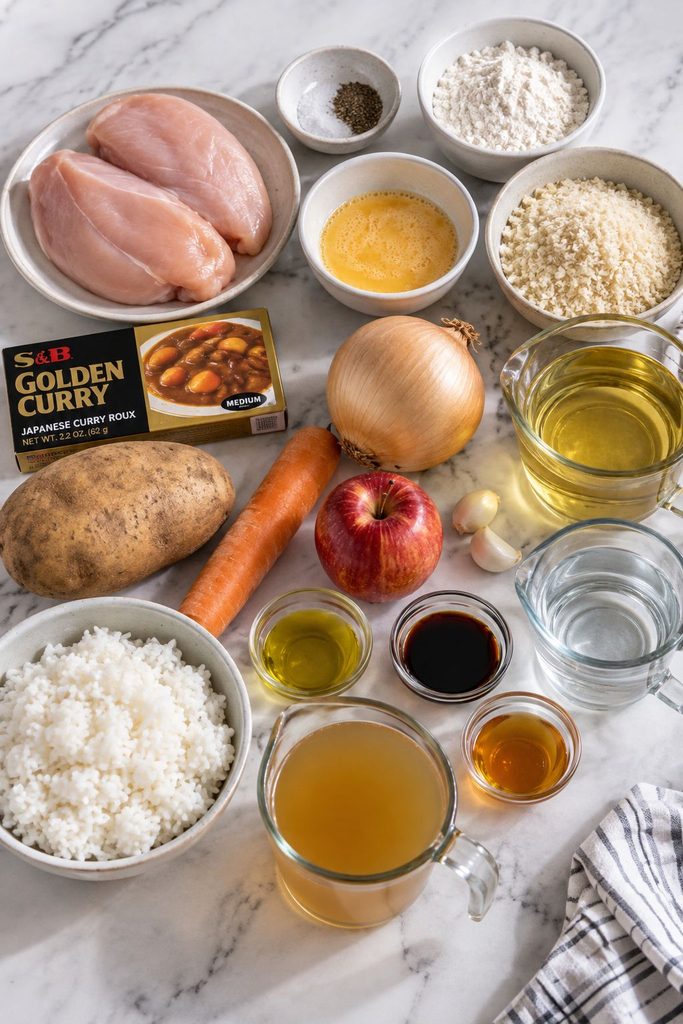
Chicken breasts form the main protein of the dish. They should be boneless and skinless and lightly pounded before breading.
Salt and black pepper season the chicken before it is coated.
All-purpose flour, egg, and panko breadcrumbs create the classic three-stage katsu coating. The flour gives the egg something to cling to, while the panko creates the crisp exterior.
Vegetable oil is used for frying the breaded chicken.
For the Japanese Curry
Japanese curry roux provides the foundation of the curry sauce, bringing concentrated curry seasoning and helping create its characteristic thick consistency.
Yellow onion, russet potato, and carrot give the curry its familiar vegetable base. The potato and carrot are cut into 1-inch pieces so they remain substantial in the finished sauce.
Olive oil and garlic begin the savory base of the curry.
Grated red apple contributes a subtle fruity sweetness that works particularly well with Japanese-style curry.
Chicken stock and water create the liquid base that the vegetables simmer in.
Soy sauce and honey add savory depth and a gentle sweetness to balance the curry.
For Serving
Cooked white rice is served underneath or alongside the curry and sliced chicken katsu, soaking up the flavorful sauce.
Cooking Instructions
Step 1: Prepare the Chicken
Lightly pound the 2 boneless, skinless chicken breasts to even out their thickness. Season both sides with 1 teaspoon salt and ¼ teaspoon black pepper.
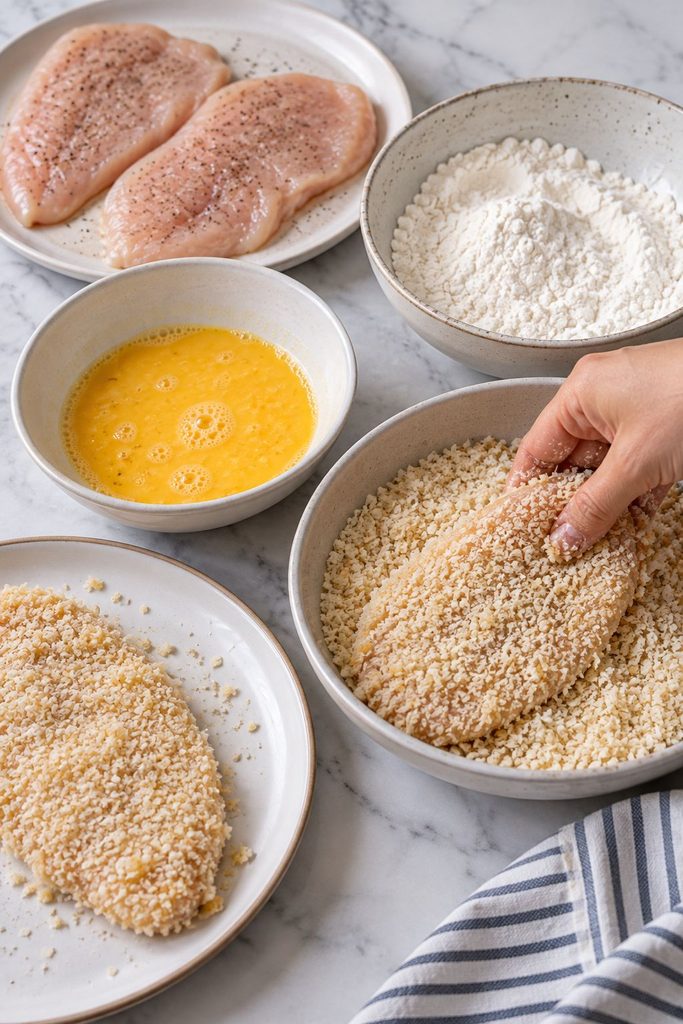
Set up three separate shallow dishes. Place ¼ cup all-purpose flour in the first, 1 lightly beaten egg in the second, and 1 cup panko breadcrumbs in the third.
Coat each chicken breast in the flour, turning it so the surface is covered. Shake off any excess flour, then dip the chicken into the beaten egg. Allow excess egg to drip away before transferring the chicken to the panko.
Coat the chicken thoroughly with panko, gently pressing the breadcrumbs onto the surface so they form an even layer.
Step 2: Fry the Chicken Katsu
Add 3 cups vegetable oil to a suitable deep skillet or pot and heat the oil for frying.
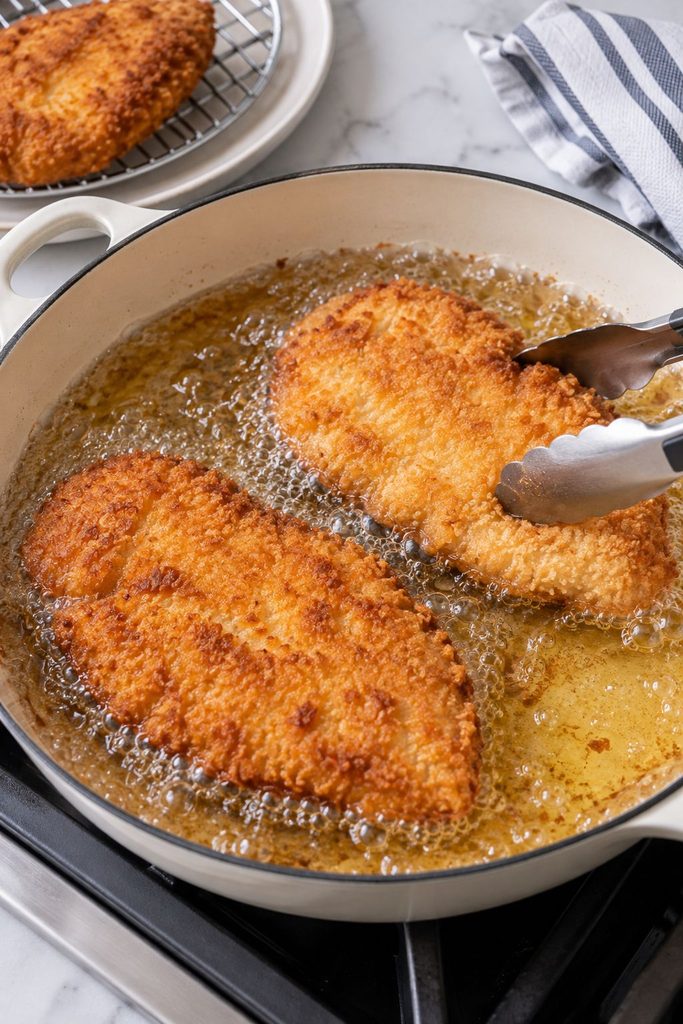
Once the oil is ready, carefully add the breaded chicken. Fry the chicken until the coating becomes deep golden brown and crisp, turning as needed so both sides cook evenly.
The exact cooking time will depend on the thickness of the chicken and the frying temperature, so use the appearance of the coating and the doneness of the chicken as your guide. The finished katsu should have a crisp, golden exterior and be fully cooked through.
Transfer the cooked chicken to a suitable surface to drain excess oil. Allow it to rest briefly while you prepare the curry.
Step 3: Cook the Curry Vegetables
While the chicken is being prepared, peel and dice 1 large russet potato and 1 large carrot into approximately 1-inch pieces. Wedge cut 1 yellow onion. Mince 2 cloves garlic, and peel and grate the red apple.
Heat 1 tablespoon olive oil in a large pot or saucepan over medium heat. Add the onion and garlic and cook until the onion begins to soften and the garlic becomes fragrant.
Add the diced potato and carrot, stirring them into the onion and garlic mixture so the vegetables are coated with the oil and aromatics.
Continue cooking briefly, stirring as needed, so the vegetables begin to develop flavor before the liquid is added.
Step 4: Build the Japanese Curry
Add the ¼ cup grated red apple to the vegetables and stir to combine. Pour in 2 cups chicken stock and ½ cup water, then add 1 tablespoon soy sauce and 1 tablespoon honey.
Stir everything together and bring the mixture to a gentle simmer.
The stock provides the liquid needed to cook the vegetables, while the apple, soy sauce, and honey build the sweet-savory balance of the curry.
Continue simmering until the potato and carrot become tender. The vegetables should be soft enough to eat comfortably but still hold their shape in the sauce.
Step 5: Add the Curry Roux
Once the vegetables are tender, add the 2 ounces Japanese curry roux to the pot.
Stir thoroughly until the curry roux dissolves into the liquid and the sauce becomes thick, smooth, and evenly seasoned. Continue stirring as needed so the roux incorporates completely.
The finished curry should have a rich consistency that coats the vegetables and can be spooned generously over the rice.

Step 6: Slice and Serve the Katsu
Let the fried chicken rest briefly, then slice each chicken breast into strips.
Arrange 2 cups cooked white rice for serving. Place the sliced chicken katsu over or beside the rice, then spoon the Japanese curry and vegetables around the chicken.
Serve while the katsu is still crisp and the curry is hot, allowing the crunchy chicken, rich sauce, tender vegetables, and fluffy rice to come together in each bite.
What to Serve With Japanese Katsu Curry
Japanese Katsu Curry is already a hearty meal with chicken, vegetables, curry sauce, and rice, so it does not need many extras. A few simple sides can add freshness or texture without competing with the curry.
Steamed Vegetables
Lightly steamed broccoli, green beans, or another favorite vegetable can add a fresh element alongside the rich curry. Keep the seasoning simple so the Japanese curry remains the main flavor.
Japanese-Style Pickles
A small serving of Japanese pickles provides a crisp, tangy contrast to the warm curry and crunchy chicken. Their acidity can also help balance the richness of the meal.
Simple Cucumber Salad
A lightly dressed cucumber salad works well when you want something cool and refreshing next to the hot curry. Thinly sliced cucumber adds plenty of crunch without making the meal feel heavier.
Extra White Rice
If you like plenty of curry sauce with every bite, having additional cooked white rice available is an easy option. The fluffy rice absorbs the sauce and helps balance the bold curry flavor.
Storage Instructions
Storing Leftover Curry
Allow the Japanese curry to cool before transferring it to an airtight container. Refrigerate the curry promptly and use it within 3–4 days for the best quality.
The curry may thicken considerably after chilling. When reheating, warm it gently and stir until the sauce loosens and becomes smooth again. Add a small amount of water if necessary to reach your preferred consistency.
Storing Chicken Katsu
For the best texture, store the fried chicken katsu separately from the curry and rice. Keeping the crispy chicken away from the sauce helps prevent the panko coating from becoming unnecessarily soggy.
Place the cooled katsu in an airtight container and refrigerate it. When ready to eat, reheat it using a method that allows the coating to crisp again rather than leaving it sitting in the curry while it warms.
Freezing
The curry itself can be frozen in a suitable airtight container. Allow it to cool before freezing and leave enough room for expansion.
For better texture, freeze the curry separately from the rice and chicken katsu. Thaw the curry safely in the refrigerator before reheating, then prepare or reheat the other components separately.
Estimated Nutrition
Nutrition will vary depending on the exact Japanese curry roux, the amount of oil absorbed during frying, the size of the chicken breasts, and the portions served.
As an estimate, Japanese Katsu Curry provides approximately 850–950 calories per serving, assuming the recipe makes about 4 servings. This estimate includes the chicken katsu, curry, vegetables, and white rice.
Frequently Asked Questions
Can I prepare the curry ahead of time?
Yes. The curry is well suited to making ahead because its flavors can continue to develop as it rests. Refrigerate it in an airtight container and reheat it gently when ready to serve. For the best texture, prepare the chicken katsu separately so its panko coating stays crisp.
Why is Japanese curry roux used in this recipe?
Japanese curry roux is a convenient way to create the characteristic thick, savory curry sauce associated with Japanese curry. It also provides much of the seasoning and body of the finished sauce, so there is no need to build the curry seasoning from a long list of individual spices.
Can I make the chicken katsu and curry at the same time?
You can prepare the curry while getting the chicken ready, as the two components have separate cooking processes. The curry vegetables need time to simmer until tender, while the breaded chicken needs to be fried until golden and cooked through. Coordinating the two means you can serve the katsu while it is still crisp and the curry is hot.
How do I keep the katsu crispy?
The most important thing is to keep the fried chicken separate from the curry until serving. The panko coating naturally softens when exposed to liquid, so spooning curry around the chicken rather than covering it completely helps preserve more of its crunch.
Can I use a different type of rice?
The supplied recipe calls for cooked white rice, which is particularly well suited to the thick curry because it provides a neutral base for the sauce. For the intended recipe, white rice is the best match.
What gives the curry its subtle sweetness?
The sweetness comes primarily from the grated red apple and honey. They balance the savory soy sauce and curry roux without requiring a large amount of added sweetness. Grating the apple also helps it blend into the sauce as the curry cooks.
Conclusion
Japanese Katsu Curry combines everything you want from a comforting dinner: crisp panko-coated chicken, tender vegetables, thick savory curry, and fluffy white rice. The grated apple and honey add a gentle sweetness, while soy sauce and Japanese curry roux give the sauce its rich depth. Keep the chicken separate from the curry until serving, and you’ll get the best contrast between the crunchy katsu and smooth, flavorful sauce.
Print
Japanese Katsu Curry
- Total Time: 55 minutes
- Yield: 4 servings 1x
Description
Crispy chicken katsu served with rich Japanese curry, tender potatoes and carrots, and fluffy white rice. A comforting Japanese Katsu Curry made with panko-coated chicken and a savory-sweet curry sauce.
Ingredients
Chicken Katsu
- 2 boneless skinless chicken breasts, lightly pounded
- 1 teaspoon salt
- ¼ teaspoon black pepper
- ¼ cup all-purpose flour
- 1 egg, lightly beaten
- 1 cup panko breadcrumbs
- 3 cups vegetable oil
Japanese Curry
- 2 oz Japanese Curry Roux
- 1 yellow onion, wedge cut
- 1 large russet potato, peeled and diced into 1-inch pieces
- 1 large carrot, peeled and diced into 1-inch pieces
- 1 tablespoon olive oil
- 2 cloves garlic, minced
- ¼ cup red apple, peeled and grated, about 1 large apple
- 2 cups chicken stock
- ½ cup water
- 1 tablespoon soy sauce
- 1 tablespoon honey
Serve
- 2 cups cooked white rice
Instructions
- Prepare the chicken: Lightly pound the chicken breasts to even out their thickness. Season both sides with salt and black pepper.
- Bread the chicken: Place the flour, lightly beaten egg, and panko breadcrumbs in three separate shallow dishes. Coat each chicken breast in flour, then dip into the beaten egg, allowing the excess to drip off. Coat thoroughly with panko breadcrumbs.
- Fry the chicken: Heat the vegetable oil in a suitable deep skillet or pot. Carefully fry the breaded chicken until the coating is deep golden brown and crisp and the chicken is fully cooked through. Transfer to a suitable surface to drain excess oil.
- Prepare the curry vegetables: Peel and dice the potato and carrot into 1-inch pieces. Wedge cut the onion, mince the garlic, and peel and grate the red apple.
- Cook the vegetables: Heat the olive oil in a large pot or saucepan over medium heat. Add the onion and garlic and cook until the onion begins to soften and the garlic becomes fragrant. Add the potato and carrot and stir to combine.
- Build the curry: Add the grated red apple, chicken stock, water, soy sauce, and honey. Stir well and bring to a gentle simmer. Continue cooking until the potato and carrot are tender.
- Add the curry roux: Add the Japanese curry roux and stir thoroughly until it dissolves into the liquid and the sauce becomes thick and smooth.
- Slice and serve: Slice the fried chicken katsu into strips. Serve with the cooked white rice and spoon the Japanese curry and vegetables around the chicken.
Notes
- Lightly pound the chicken breasts to create an even thickness so they cook more consistently.
- Keep the chicken katsu separate from the curry until serving to help preserve the crisp panko coating.
- The curry can be prepared ahead and refrigerated, while the katsu is best served freshly fried for maximum crispness.
- Prep Time: 20 minutes
- Cook Time: 35 minutes
- Category: Dinner
- Method: Stovetop
- Cuisine: Japanese
Nutrition
- Serving Size: 4 servings
- Calories: 850–950 calories per serving
Keywords: Japanese Katsu Curry, chicken katsu curry, Japanese curry, chicken katsu, Japanese curry recipe, crispy chicken katsu, Japanese dinner recipe

Leave a Comment