
Hasselback Potatoes turn simple russet potatoes into an impressive side dish with very little extra effort. Each potato is sliced into thin, connected layers, allowing the edges to become beautifully crisp while the center stays tender and fluffy. Melted butter coats the potato as it roasts, adding richness while letting the natural flavor of the potato shine through.
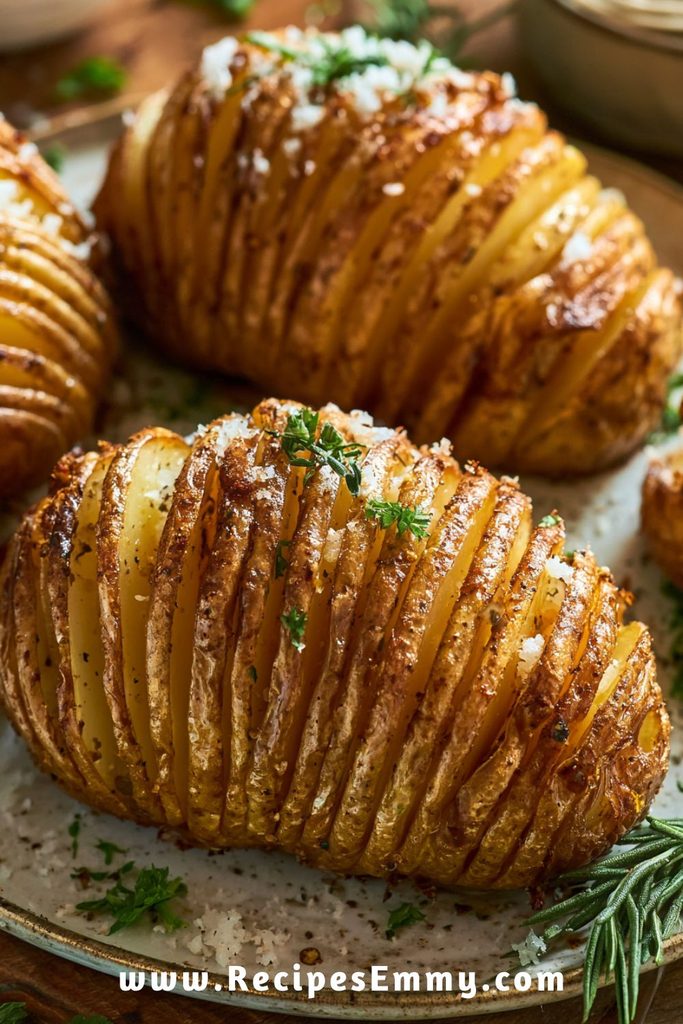
The key to great Hasselback Potatoes is the slicing technique. The cuts need to be close together without going completely through the potato, creating the signature accordion-like shape. As the potatoes bake, those thin slices fan out slightly, giving you plenty of crispy edges and soft potato in every bite.
Why You’ll Love These Hasselback Potatoes
- Crispy and fluffy: The thin slices create more surface area for browning while the center remains soft.
- Simple ingredients: You only need russet potatoes, butter, salt, and pepper.
- Great presentation: The fanned-out potatoes look much more special than ordinary baked potatoes.
- Easy to customize: The basic recipe works beautifully on its own, but you can add herbs, garlic, cheese, or other toppings if desired.
- Perfect alongside dinner: They pair naturally with roasted meats, chicken, steak, seafood, or a simple vegetable-based meal.
Preparation and Tools
Start with large russet potatoes that are similar in size. Russets work especially well because they have a starchy, fluffy interior that becomes tender during baking while the exposed edges can turn crisp and golden.
Wash and scrub the potatoes thoroughly, then pat them completely dry. Leaving the skins on gives Hasselback Potatoes their rustic appearance and provides additional texture.
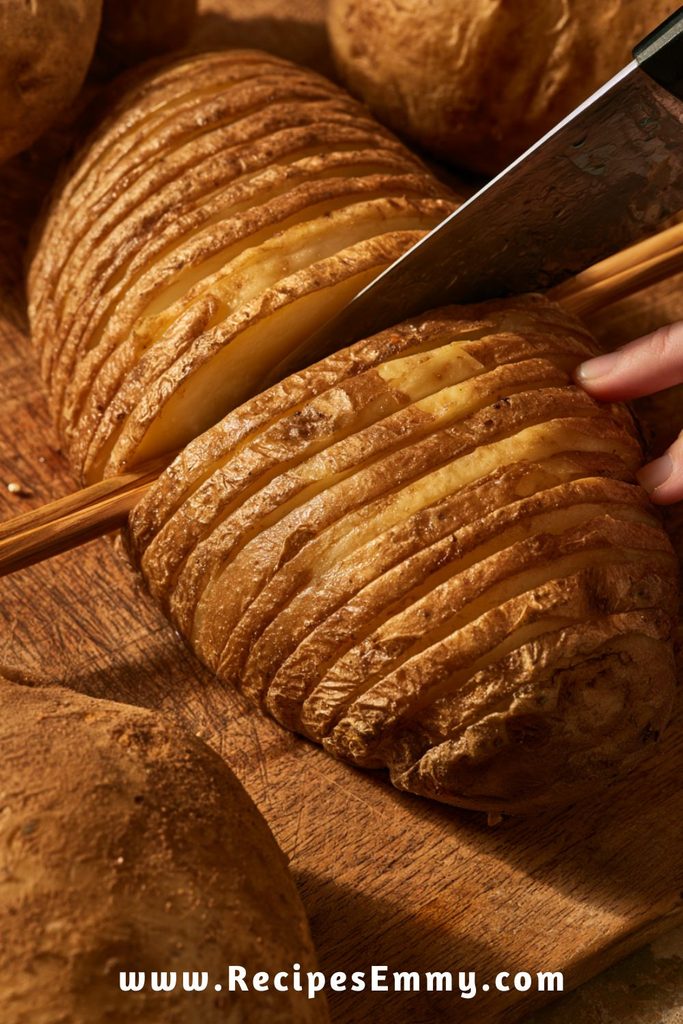
The most important tool is a sharp chef’s knife. You want to make many thin cuts across each potato while keeping the bottom intact. One easy way to control the depth is to place the potato between two chopsticks or the handles of two wooden spoons. When the knife reaches the chopsticks, it stops before cutting all the way through.
You’ll also need a small bowl or measuring cup for the melted butter and a rimmed baking sheet or baking dish to hold the potatoes while they roast. A pastry brush is useful for distributing the butter between the slices, although a spoon can work if you don’t have one.
Preparation Tips
Keep the slices close together
The thinner and more numerous the cuts, the more pronounced the Hasselback effect will be. Aim for slices roughly ⅛-inch apart. Don’t worry if they aren’t perfectly identical, but try to keep the cuts consistent so the potatoes cook evenly.
Don’t cut completely through the potato
This is the most important part of preparation. If the knife goes all the way through, the potato will separate into individual pieces instead of staying together. Cutting between two chopsticks or wooden spoon handles makes it much easier to control the depth.
Dry the potatoes well
After washing, pat the potatoes dry with a clean kitchen towel or paper towels. A dry surface helps the butter coat the potato properly and encourages better browning during roasting.
Melt the butter gently
The butter only needs to be melted, not browned or boiling hot. Divide it as directed so some can be used during the initial preparation and some can be applied later as the potatoes roast.
Season between the slices
Don’t season only the outside. Because Hasselback Potatoes have so many exposed layers, salt and pepper can be worked into the cuts for better overall flavor. A pastry brush can help move butter into some of the spaces as they open during baking.
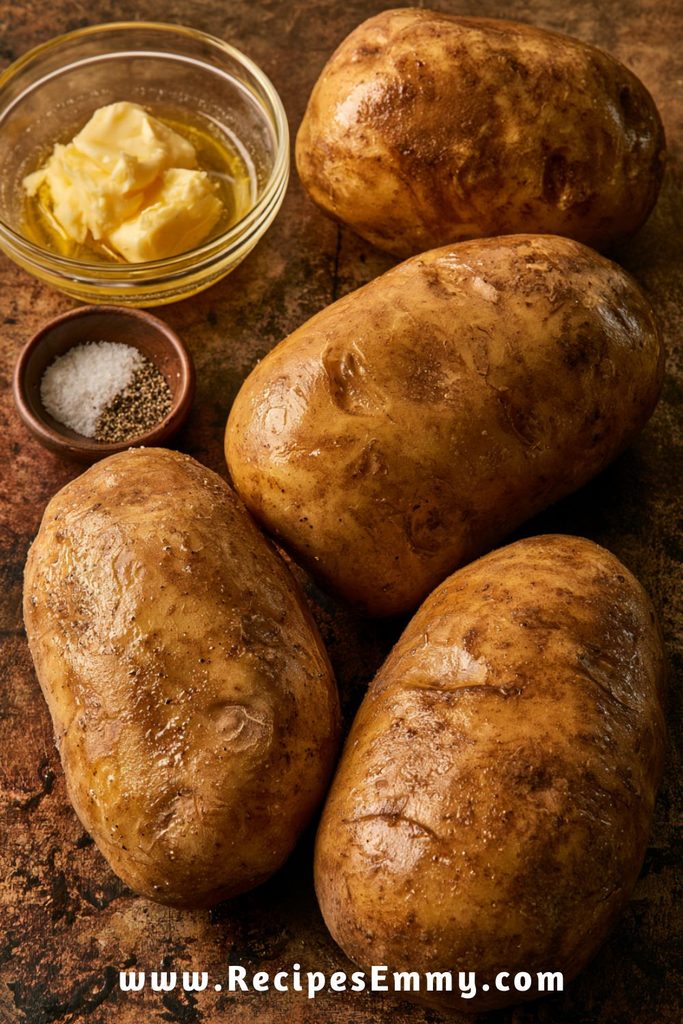
Ingredients
Russet potatoes
Choose four large russet potatoes and try to use potatoes of roughly similar size. This helps them finish cooking at approximately the same time. The russet’s fluffy interior is especially well suited to this preparation.
Unsalted butter
Four tablespoons of melted unsalted butter provide the main richness and help the exposed potato surfaces brown in the oven. Using unsalted butter also gives you better control over the seasoning.
Kosher salt
Kosher salt seasons the potatoes and helps bring out their natural flavor. Some is used during preparation, with additional salt added to taste.
Black pepper
Pepper adds a mild savory bite that complements the buttery potatoes without overpowering them.
Cooking Instructions
Step 1: Prepare the Potatoes
Preheat the oven to 425°F (220°C).
Wash and scrub the russet potatoes thoroughly, then pat them dry. Leave the skins on.
Place one potato on a cutting board. Using a sharp knife, make thin slices across the potato, spacing the cuts about ⅛ inch apart. Cut almost all the way through, but leave the bottom of the potato connected.
For easier cutting, position the potato between two chopsticks or wooden spoon handles. The handles act as a guide and prevent the knife from reaching the cutting board.
Repeat with the remaining potatoes.
Step 2: Season and Butter
Arrange the sliced potatoes on a rimmed baking sheet, keeping the potatoes upright with the cuts facing upward.
Brush the potatoes with some of the melted butter, working gently over the top and into the cuts where possible. Sprinkle them with the kosher salt and pepper.
Don’t force the slices apart at this stage. Some of the cuts may still be quite tight, and they will gradually open as the potatoes cook.
Step 3: Begin Roasting
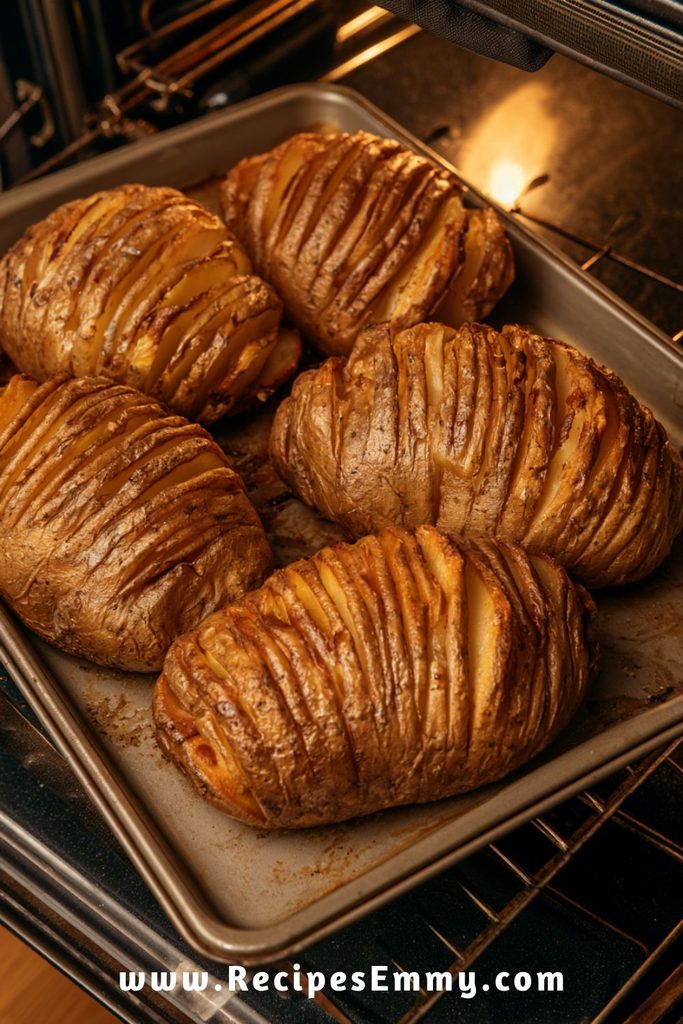
Place the baking sheet in the preheated oven and roast the potatoes until the slices begin to open and the exposed edges start to become golden.
After the potatoes have had time to heat through, carefully remove the baking sheet and brush the potatoes with more melted butter. As the slices become more flexible, you can gently encourage them to fan open, but avoid pulling them apart.
Return the potatoes to the oven and continue roasting until the centers are tender and the edges are deeply golden and crisp.
Cooking time will depend on the size of the potatoes and the exact spacing of the slices, so use texture rather than the clock alone as your final guide. A thin knife or skewer inserted into the center should slide in easily when the potatoes are done.
Step 4: Finish and Serve
Remove the potatoes from the oven once the centers are completely tender and the sliced edges are crisp.
Taste and add additional salt and pepper if needed. Serve the Hasselback Potatoes while hot so the contrast between the crisp edges and fluffy centers is at its best.
Notes
For the crispiest edges, avoid crowding the potatoes together on the baking sheet. Air circulation around each potato helps the exposed surfaces roast rather than steam.
If your potatoes are particularly large, they may need additional oven time. Check the center with a thin knife rather than relying entirely on appearance, since the outside can become beautifully browned before the thickest part is tender.
The basic butter, salt, and pepper combination keeps these potatoes simple and versatile. If you want to vary the flavor, fresh herbs, minced garlic, grated Parmesan, or other savory toppings can be added according to the meal you’re serving.
Common Mistakes to Avoid
Cutting all the way through
The most common problem is slicing too deeply. Once the potato is separated into pieces, you lose the characteristic Hasselback shape. Use chopsticks or wooden spoon handles as a depth guide to make the cuts safer and more consistent.
Making the slices too wide
Large gaps between slices reduce the number of crispy edges and make the finished potatoes less distinctive. Thin, closely spaced cuts give the best combination of crispness and tenderness.
Skipping the butter between the slices
Brushing only the top leaves much of the exposed potato unseasoned and less flavorful. As the slices open during roasting, brush additional melted butter into the spaces where it can reach.
Removing the potatoes before the center is tender
A beautifully browned exterior doesn’t necessarily mean the inside is finished. Test the thickest part with a thin knife or skewer. It should pass through with little resistance.
Overcrowding the baking sheet
Potatoes placed too close together can trap steam and make it harder for the edges to crisp. Give each potato enough space for hot air to circulate around it.
What to Serve With Hasselback Potatoes
Hasselback Potatoes are versatile enough to work with a wide range of main dishes. Their crisp edges and buttery, fluffy centers make them especially useful when you want a side that feels a little more special than standard roasted or baked potatoes.
- Roasted or grilled chicken: The mild buttery potatoes complement simply seasoned chicken without competing with its flavor.
- Steak: Serve them alongside a grilled or pan-seared steak for a hearty dinner.
- Roasted beef: The crisp potato edges work particularly well with tender roasted beef and its savory juices.
- Baked or roasted salmon: The potatoes provide a comforting, starchy contrast to delicate fish.
- Roasted vegetables: Pair with vegetables such as carrots, broccoli, or green beans for an easy meatless-style side combination.
- Simple salads: A crisp green salad can balance the richness of the buttered potatoes.
Because the potatoes already contain butter, salt, and pepper, they can be served without a heavy sauce. If you’re serving them with a richly seasoned main course, keeping the potatoes simply seasoned allows the flavors of the entire meal to remain balanced.
Storage Instructions
Hasselback Potatoes are best eaten fresh from the oven because that’s when the edges have their best crispness. If you have leftovers, allow them to cool before transferring them to an airtight container and refrigerating them.
They can generally be refrigerated for up to 3–4 days. For the best texture, reheat them in an oven or air fryer rather than a microwave. A hot oven helps restore some of the crispness to the exposed potato edges, while microwave reheating tends to make them softer.
To reheat in the oven, place the potatoes on a baking sheet and warm them at around 400°F (200°C) until heated through and the edges have regained some crispness. The exact time depends on their size and how cold they are.
If you know you need to prepare them ahead, the potatoes can be sliced and kept refrigerated before roasting, provided they are well covered and used within a reasonable period. For the best results, however, roasting them shortly before serving gives you the crispest exterior.
Freezing is not the preferred option for this recipe. The texture of the cooked potato can become less pleasant after freezing and thawing, particularly around the thin roasted edges.
Estimated Nutrition
Nutrition will vary according to the exact size of the potatoes and how much butter and seasoning is ultimately retained on each serving.
Estimated per serving: approximately 280 calories
This estimate assumes the four large potatoes are divided into four servings and that the full amount of butter is used. It is intended as a general estimate rather than a verified nutritional analysis.
Frequently Asked Questions
How thin should I slice Hasselback Potatoes?
Aim for slices approximately ⅛ inch apart. Thin, closely spaced cuts create more exposed edges for browning while keeping enough potato between the cuts for the potato to remain intact.
How do I stop myself from cutting through the potato?
Place the potato between two chopsticks or the handles of two wooden spoons before slicing. These create a physical stopping point for the knife, helping you make deep cuts without accidentally slicing all the way through.
Can I use a different type of potato?
Russet potatoes are particularly suitable because their starchy interior becomes fluffy while the thin exposed edges can become crisp. Other potatoes can work, but changing the variety may alter the cooking time and final texture.
How do I know when the potatoes are done?
Look for deeply golden, crisp edges and a tender center. Insert a thin knife or skewer into the thickest portion of a potato. It should slide in easily with little resistance.
Why aren’t my Hasselback Potatoes getting crispy?
Excess moisture, overcrowding, or insufficient roasting time can prevent the exposed edges from becoming crisp. Make sure the potatoes are dried well before preparation, leave space between them on the baking sheet, and continue roasting until the edges are properly browned and the center is tender.
Can I add other seasonings?
Yes. The supplied recipe keeps the potatoes simple with butter, kosher salt, and pepper, but the basic preparation can be adapted with additional savory seasonings or toppings if desired. Additions should complement the meal rather than overwhelm the buttery potato.
Conclusion
Hasselback Potatoes are a simple way to give an everyday potato a more interesting texture and appearance. The combination of thin crisp edges, a fluffy center, melted butter, salt, and pepper keeps the recipe straightforward while making the potatoes feel special enough for a dinner gathering. The slicing technique takes a little care, but using chopsticks or wooden spoon handles makes it much easier to get consistent cuts without separating the potato.
Serve them hot from the oven alongside chicken, steak, seafood, roasted vegetables, or a fresh salad. Once you have the slicing technique down, this recipe is an easy one to return to whenever you want a potato side with plenty of golden, buttery edges.
Print
Hasselback Potatoes
- Total Time: 1 hour 10 minutes
- Yield: 4 servings 1x
Description
These Hasselback Potatoes are thinly sliced russet potatoes brushed with melted butter, seasoned with kosher salt and pepper, then roasted until the edges are crisp and golden while the centers become tender and fluffy.
Ingredients
- 4 large russet potatoes, washed and patted dry
- 4 tablespoons unsalted butter, melted, divided
- 1 teaspoon kosher salt
- ½ teaspoon pepper
- Salt and pepper, to taste
Instructions
- Preheat the oven to 425°F (220°C).
- Wash and scrub the russet potatoes, then pat them completely dry. Leave the skins on.
- Place each potato on a cutting board between two chopsticks or wooden spoon handles. Using a sharp knife, make thin cuts about ⅛ inch apart, cutting almost all the way through while keeping the bottom connected.
- Arrange the potatoes on a rimmed baking sheet with the cuts facing upward.
- Brush the potatoes with some of the melted butter, working gently into the cuts where possible. Season with the kosher salt and pepper.
- Roast in the preheated oven until the slices begin to open and the edges start becoming golden.
- Carefully remove the baking sheet and brush the potatoes with the remaining melted butter. Gently encourage the slices to fan open as they soften, taking care not to pull them apart.
- Return the potatoes to the oven and continue roasting until the edges are deeply golden and crisp and the centers are tender.
- Test the thickest part with a thin knife or skewer. It should slide in easily.
- Remove from the oven, season with additional salt and pepper to taste, and serve hot.
Notes
- Use chopsticks or wooden spoon handles as a guide to prevent cutting completely through the potatoes.
- Keep the slices thin and closely spaced for more crisp, golden edges.
- Cooking time can vary depending on potato size, so test the center with a knife or skewer before removing from the oven.
- Prep Time: 15 minutes
- Cook Time: 55 minutes
- Category: Dinner
- Method: Oven-Roasted
- Cuisine: American
Nutrition
- Serving Size: 4 servings
- Calories: 280 calories
Keywords: Hasselback potatoes, Hasselback potato recipe, crispy Hasselback potatoes, baked Hasselback potatoes, roasted potatoes





Leave a Comment