
Chicken Pad Thai is a colorful, satisfying noodle dish packed with tender strips of chicken, crisp vegetables, scrambled egg, roasted peanuts, and a tangy-sweet sauce. Flat rice noodles soak up the combination of soy sauce, fish sauce, lime juice, and honey, while garlic, ginger, and optional sriracha bring plenty of savory flavor and gentle heat.

This homemade Chicken Pad Thai comes together with familiar ingredients and plenty of texture in every bite. The cabbage and carrots add freshness and crunch, the peanuts provide a nutty finish, and green onions brighten the finished dish. It is a great choice when you want a substantial noodle dinner without making a complicated meal.
Why You’ll Love This Recipe
- Tender chicken and hearty noodles: Thinly sliced chicken breast cooks quickly and pairs perfectly with soft flat rice noodles.
- Sweet, salty, and tangy flavor: Soy sauce, fish sauce, lime juice, and honey or agave create a balanced sauce with plenty of savory depth.
- Lots of texture: Cabbage, carrots, scrambled egg, green onions, and roasted peanuts keep every forkful interesting.
- Easy to customize: Sriracha can be added according to your preferred level of heat, while Thai basil can be used in place of green onions if desired.
- A complete meal: Chicken, noodles, vegetables, egg, and peanuts make this a filling dinner served straight from the skillet.
Preparation and Tools
Before cooking, have all of the ingredients measured and ready. Pad Thai moves quickly once the noodles and chicken hit the pan, so having everything prepared prevents overcooking while you search for the next ingredient.
You’ll need a large skillet or wok with enough room to toss the noodles and vegetables together. A cutting board and sharp knife are useful for slicing the chicken into thin strips and preparing the onion, cabbage, carrots, garlic, and green onions.
Prepare the flat rice noodles according to the package directions before beginning the main cooking process. Drain them well so excess water does not dilute the sauce when everything is combined.
Preparation Tips
Slice the Chicken Thinly
Cut the boneless, skinless chicken breast into thin, long strips. Keeping the pieces relatively thin helps them cook evenly and makes them easy to pick up with the noodles.
Have the Vegetables Ready
The onion, cabbage, and carrots should be prepared before you start cooking. Finely minced or pressed garlic and the ground ginger should also be ready to add when needed.
Because the vegetables cook alongside the chicken and noodles, having them prepared in advance makes the cooking process much smoother.
Balance the Lime Juice
The recipe calls for ¼ to ⅓ cup freshly squeezed lime juice. Start with the lower amount if you prefer a milder tang, then adjust toward ⅓ cup according to your taste.
Control the Heat
The 2 tablespoons of sriracha are optional and to taste. If you prefer a milder Pad Thai, use less or leave it out entirely. For more heat, you can use the full amount specified in the recipe.
Choose Your Garnish
Green onions are sliced into thin rounds and added toward the end. If you prefer, the recipe allows ⅓ cup minced fresh Thai basil as an alternative.
The roasted peanuts are especially important for the final texture. Reduced-salt peanuts work well because the fish sauce and soy sauce already contribute plenty of savory saltiness.
Ingredients
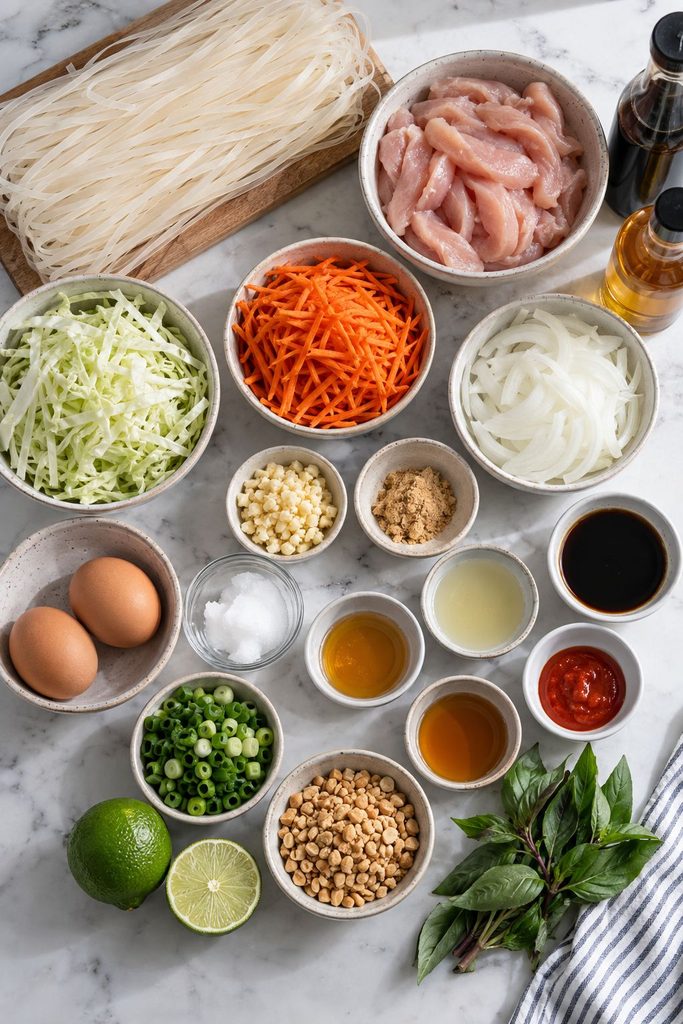
The foundation of this Chicken Pad Thai is flat rice noodles, which provide the soft, chewy texture that carries the sauce and other ingredients.
For cooking, the recipe uses both toasted sesame oil and coconut oil. The sesame oil adds a distinct nutty aroma, while coconut oil is used alongside it to cook the main ingredients.
A diced sweet Vidalia onion provides a mild savory base. The boneless, skinless chicken breast is sliced into thin strips so it can cook efficiently in the skillet.
Garlic and ginger add aromatic flavor. The recipe uses ground ginger, although ½ tablespoon fresh ginger can be substituted.
For vegetables, thinly sliced green cabbage and shredded carrots bring color and a little crunch. They also balance the richness of the noodles and chicken.
The sauce is built from low-sodium soy sauce, fish sauce, freshly squeezed lime juice, and honey or agave syrup. Together, these ingredients provide salty, savory, tangy, and lightly sweet flavors.
A large scrambled egg adds another layer of texture and richness. Finally, green onions or Thai basil and chopped roasted peanuts finish the dish.
Cooking Instructions
1. Prepare the Rice Noodles
Cook the flat rice noodles according to the package directions. Once prepared, drain them thoroughly and set them aside while you prepare the remaining ingredients.
Avoid letting the cooked noodles sit in excess water. Well-drained noodles will combine more easily with the sauce without making the finished dish watery.
2. Cook the Chicken and Onion
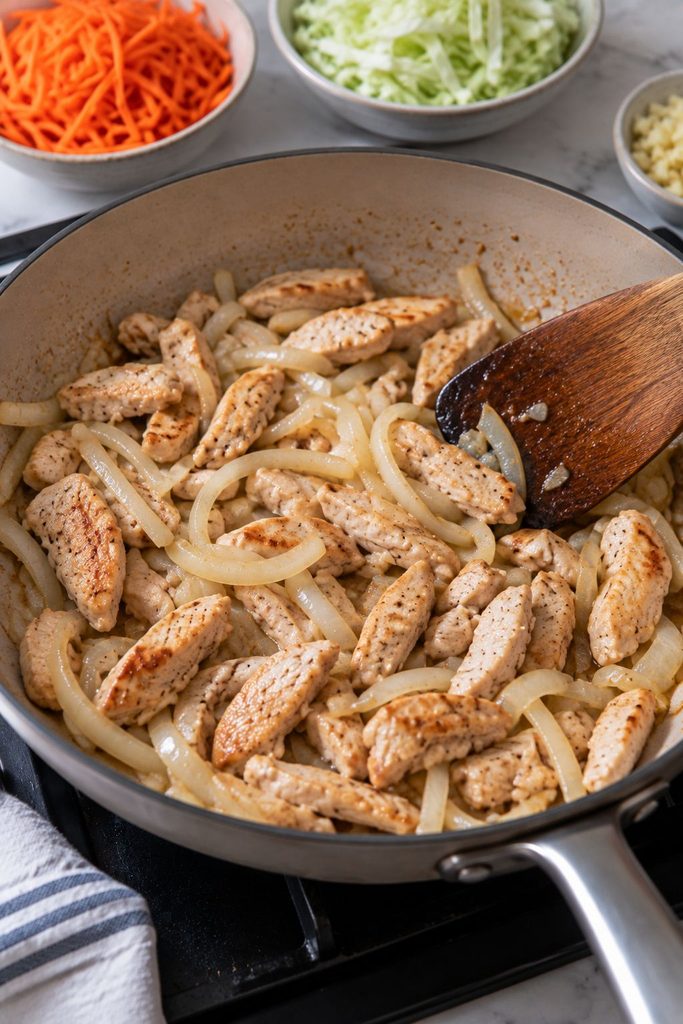
Heat the toasted sesame oil and coconut oil in a large skillet or wok. Add the diced onion and sliced chicken breast.
Cook until the chicken is cooked through and the onion has softened. The chicken should no longer be pink in the center, and the thin strips should be tender enough to combine easily with the noodles.
3. Add the Garlic and Ginger
Add the finely minced or pressed garlic along with the ground ginger. Stir them into the chicken and onion mixture so their aromatics can spread throughout the skillet.
If using the fresh ginger substitution, use ½ tablespoon fresh ginger as specified in the recipe.

4. Add the Cabbage and Carrots
Stir in the thinly sliced green cabbage and shredded carrots. Cook them with the chicken mixture until the vegetables begin to soften while retaining some texture.
The cabbage should become more tender, while the carrots should still provide a pleasant bite rather than becoming completely soft.
5. Add the Sauce Ingredients
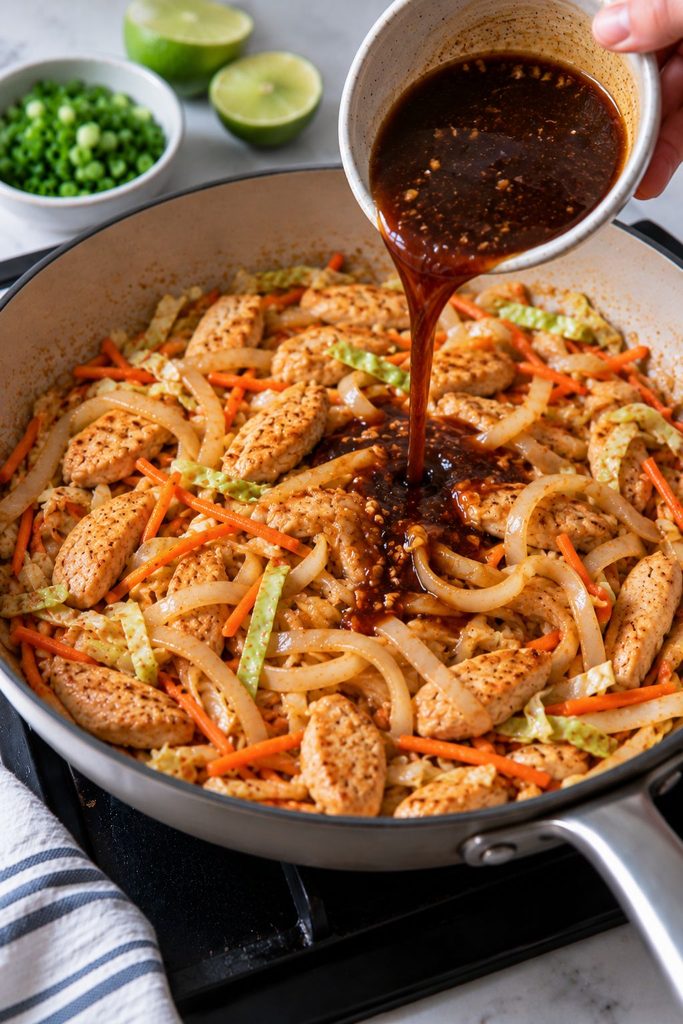
Pour in the low-sodium soy sauce, fish sauce, freshly squeezed lime juice, and honey or agave syrup. Add the sriracha if you are using it.
Stir thoroughly so the sauce coats the chicken and vegetables. The combination should smell savory and aromatic, with the lime adding a noticeable brightness.
6. Add the Noodles and Egg
Add the prepared flat rice noodles to the skillet and toss everything together until the noodles are evenly coated with the sauce and mixed with the chicken and vegetables.
Add the large scrambled egg and gently toss it through the noodles. Continue mixing until the egg is distributed throughout the dish.
7. Finish With Green Onions and Peanuts
Add the sliced green onions, or use ⅓ cup minced fresh Thai basil instead if preferred. Toss briefly to distribute the fresh ingredient.
Finish with the ⅔ cup chopped roasted peanuts, making sure some are mixed through the noodles while keeping their texture noticeable.
Serve the Chicken Pad Thai while warm, with the peanuts providing a crunchy contrast to the tender noodles, chicken, and vegetables.
What to Serve With Chicken Pad Thai
Chicken Pad Thai already includes noodles, chicken, vegetables, egg, and peanuts, so it works well as a complete dinner on its own. If you want to build a larger meal, keep the sides fresh and light so they complement rather than compete with the noodles.
Fresh Cucumber Salad
A crisp cucumber salad makes a refreshing contrast to the warm, savory noodles. The cool vegetables also work particularly well if you added sriracha to the Pad Thai.
Steamed or Stir-Fried Vegetables
Simple steamed broccoli, snap peas, or additional cabbage can add more vegetables without introducing another strongly seasoned dish.
Fresh Lime Wedges
Extra lime is a simple finishing touch for anyone who enjoys more acidity. A squeeze over the noodles can brighten the savory sauce and roasted peanut topping.
Thai-Inspired Fresh Fruit
Fresh pineapple, mango, or another naturally sweet fruit can provide a refreshing contrast to the salty, tangy, and spicy flavors in the noodles.
Storage Instructions
Allow leftover Chicken Pad Thai to cool before transferring it to an airtight container. Refrigerate leftovers promptly and use them within 3 to 4 days.
For the best texture, reheat only the portion you plan to eat. Rice noodles can become softer after refrigeration, so gently reheating them helps warm the dish without unnecessarily cooking the noodles again.
A small amount of moisture may be needed if the noodles seem dry after refrigeration, but avoid adding too much because the original sauce is already incorporated into the noodles.
Can You Freeze Chicken Pad Thai?
Freezing is possible, although the texture of the rice noodles and vegetables may change after thawing. The noodles can become softer and the cabbage and carrots may lose some of their original texture.
If you do freeze leftovers, place them in a suitable airtight freezer container and thaw them in the refrigerator before reheating.
Make-Ahead Preparation
Several ingredients can be prepared ahead of time to make cooking easier. Slice the chicken, dice the onion, prepare the garlic and ginger, slice the cabbage, shred the carrots, and slice the green onions before you begin cooking.
The sauce ingredients can also be measured in advance. Keeping the ingredients ready to go is particularly useful for this recipe because the cooking process moves from one ingredient to the next without much downtime.
Estimated Nutrition
Nutrition will vary depending on the specific brands of noodles, soy sauce, fish sauce, peanuts, and other ingredients used. Based on the supplied ingredients, Chicken Pad Thai is estimated to provide approximately 700 calories per serving, assuming 6 servings.
This is an estimate rather than a verified nutritional analysis.
Frequently Asked Questions
Can I use fresh ginger instead of ground ginger?
Yes. The recipe specifically allows ½ tablespoon fresh ginger as a substitute for the 1 tablespoon of ground ginger.
Is the sriracha necessary?
No. Sriracha is optional and should be added according to your taste. You can use less than the listed 2 tablespoons for a milder dish or leave it out completely.
Can I use Thai basil instead of green onions?
Yes. The recipe allows ⅓ cup minced fresh Thai basil as an alternative to the 3 sliced green onions.
What type of noodles should I use?
Use flat rice noodles, as specified in the recipe. They provide the characteristic noodle texture needed for this dish and are well suited to absorbing the sauce.
Why does the recipe use both soy sauce and fish sauce?
They contribute different types of savory flavor. Low-sodium soy sauce brings salty, rich seasoning, while fish sauce adds its own distinctive savory depth. The lime juice and honey or agave help balance these flavors.
How can I adjust the spiciness?
The easiest way is to adjust the sriracha. Since it is optional and added to taste, you can start with a smaller amount and add more if you want additional heat.
Common Mistakes to Avoid
Overcooking the Chicken
Because the chicken breast is cut into thin strips, it does not need excessive cooking. Cook it until it is cooked through, then continue with the recipe rather than leaving it in the skillet for an unnecessarily long time.
Adding Wet Noodles
Drain the rice noodles thoroughly before adding them to the skillet. Excess water can weaken the sauce and make the finished Pad Thai less flavorful.
Cutting the Chicken Too Thick
Large pieces take longer to cook and can make it harder to combine the chicken evenly with the noodles. Thin, long strips are specified for a reason: they cook efficiently and blend naturally into each forkful.
Over-softening the Vegetables
The cabbage and carrots should soften while retaining some texture. Avoid cooking them until completely limp, as their slight crunch provides an important contrast to the tender noodles.
Adding Too Much Sriracha
Sriracha can quickly become the dominant flavor. Since the recipe already contains several strong savory ingredients, start conservatively if you’re unsure about the heat level.
Forgetting the Peanuts
The roasted peanuts are more than just decoration. Their crunchy texture contrasts with the soft rice noodles and vegetables, making them an important finishing component of the dish.
Conclusion
Chicken Pad Thai brings together tender chicken, flat rice noodles, vegetables, egg, a savory-sweet lime sauce, and roasted peanuts in one satisfying meal. With adjustable sriracha and the option of green onions or Thai basil, it is easy to finish the dish according to your preferred balance of freshness, spice, and crunch.
Print
Chicken Pad Thai
- Total Time: 40 minutes
- Yield: 6 servings 1x
Description
This Chicken Pad Thai combines flat rice noodles, tender chicken, crisp cabbage and carrots, scrambled egg, and roasted peanuts with a flavorful sauce made from soy sauce, fish sauce, lime juice, and honey or agave. Sriracha adds optional heat for a satisfying homemade noodle dinner.
Ingredients
- 1 pound flat rice noodles
- 3 tablespoons toasted sesame oil
- 1 tablespoon coconut oil
- 1 medium onion, diced small
- 1 pound boneless skinless chicken breast, sliced into thin long strips
- 3 to 5 cloves garlic, finely minced or pressed
- 1 tablespoon ground ginger
- 8 ounces thinly sliced green cabbage, about 3 to 4 loosely packed cups
- 1 cup shredded carrots
- ⅓ cup low-sodium soy sauce
- ¼ cup fish sauce
- ¼ to ⅓ cup freshly squeezed lime juice
- 2 tablespoons honey or agave syrup
- 1 large egg, scrambled
- 2 tablespoons sriracha, optional and to taste
- 3 green onions, sliced into thin rounds, or ⅓ cup minced fresh Thai basil
- ⅔ cup chopped roasted peanuts
Instructions
- Cook the flat rice noodles according to the package directions. Drain thoroughly and set aside.
- Heat the toasted sesame oil and coconut oil in a large skillet or wok. Add the diced onion and sliced chicken breast. Cook until the chicken is cooked through and the onion has softened.
- Add the minced or pressed garlic and ground ginger. Stir into the chicken and onion mixture.
- Add the thinly sliced cabbage and shredded carrots. Cook until the vegetables begin to soften while retaining some texture.
- Add the low-sodium soy sauce, fish sauce, freshly squeezed lime juice, honey or agave syrup, and optional sriracha. Stir well so the sauce coats the chicken and vegetables.
- Add the prepared rice noodles and toss until they are evenly coated with the sauce and combined with the chicken and vegetables.
- Add the scrambled egg and gently toss it through the noodles until evenly distributed.
- Add the sliced green onions, or minced fresh Thai basil if using as the substitute. Toss briefly.
- Finish with the chopped roasted peanuts, mixing some through the noodles while keeping their crunchy texture. Serve warm.
Notes
- Sriracha is optional and can be adjusted according to your preferred level of heat.
- For the ginger substitution, use ½ tablespoon fresh ginger in place of the 1 tablespoon ground ginger.
- Green onions can be replaced with ⅓ cup minced fresh Thai basil as specified in the recipe.
- Prep Time: 20 minutes
- Cook Time: 20 minutes
- Category: Dinner
- Method: Stovetop
- Cuisine: Thai
Nutrition
- Serving Size: 6 servings
- Calories: 700 calories
Keywords: chicken pad thai, chicken pad thai recipe, homemade chicken pad thai, Thai chicken noodles, rice noodle chicken recipe, easy pad thai


Leave a Comment